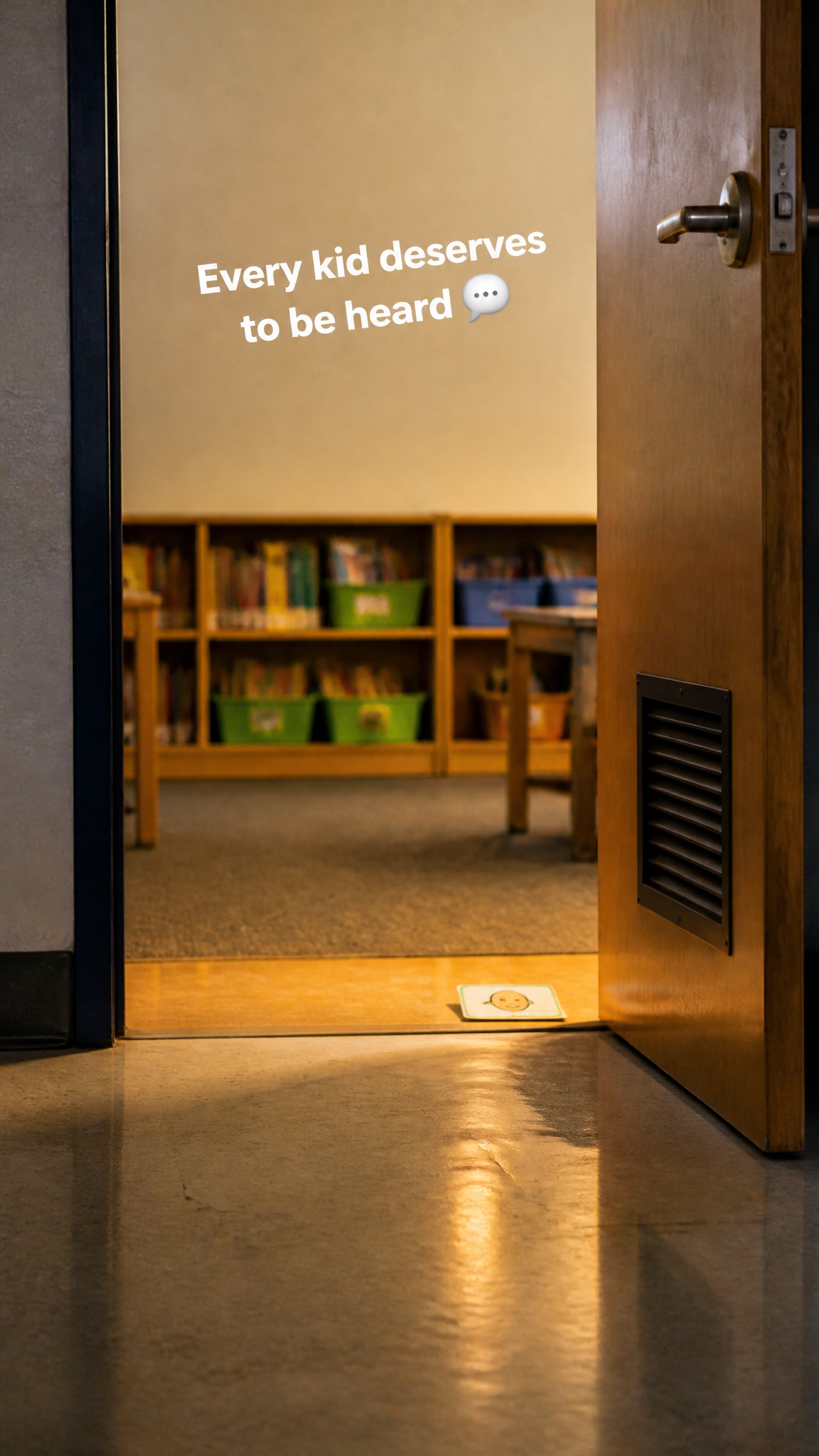
You know your child across the messy, ordinary parts of life: getting dressed, playing, asking for help, recovering from a hard moment, and being with other people. That knowledge belongs in conversations about communication support. You do not need specialized vocabulary to explain what you see.
Start with everyday examples
Before a meeting or evaluation, jot down a few concrete examples:
• What helps your child understand or express a message?
• How does your child communicate when speech is hard or unavailable?
• What happens when someone misunderstands them?
• Where does communication feel easier—at home, with familiar people, during play, or with visual supports?
• What would your child like to do more independently?
Include strengths, interests, and successful supports—not only concerns. For example: “She tells us a lot through gestures and a few spoken words. She communicates more when we slow down and show her the choices. At school, she gets upset when people guess what she means instead of giving her time.”
Ask clear, useful questions
You might ask: “What communication skills are you assessing, and how will you account for the ways my child communicates?” “What supports will be available throughout the day?” “How will this goal help my child communicate something meaningful?” “How can my child say no, ask for help, or request a break?”
If your child uses AAC, signs, or gestures, ask how those forms of communication will be available and respected across settings. Do not assume a child must master speech first before adults can support access to communication tools. The right plan depends on the child, and an SLP can help the team evaluate options.
If you are talking with a school
Explain how communication affects your child’s participation, learning, relationships, or ability to get needs met. You can ask the school team what evaluation or supports may be appropriate and how decisions are made. School eligibility and service decisions follow education rules and are made by the team; processes vary by state and district. For a specific dispute or legal question, consult a qualified advocate or attorney.
Make the next step manageable
You do not have to solve everything in one meeting. Choose the one communication barrier that matters most right now, share an example, and ask what the team can try next. Afterward, write down who will do what and when you will check in. A short, specific follow-up is often easier to act on than a long list of concerns.
Advocacy is not being difficult. It is making sure the people supporting your child understand how your child communicates and what access looks like in real life. You can ask questions, request clarification, and keep bringing the conversation back to your child’s participation and autonomy.
Bite-Sized Beginnings offers family-centered pediatric speech-language services in Naperville, Illinois. Visit bitesizedkids.com to learn more or contact the practice about your child’s communication.
Helpful reading
ASHA: Assessment and Evaluation of Speech-Language Disorders in Schools — https://www.asha.org/slp/assessment-and-evaluation-of-speech-language-disorders-in-schools/
ASHA Practice Portal: Augmentative and Alternative Communication — https://www.asha.org/practice-portal/professional-issues/augmentative-and-alternative-communication/
ASHA: IDEA — https://www.asha.org/advocacy/idea/
A next step, if you need one
Support that makes room for the whole child.
Bite-Sized Beginnings offers neuroaffirming pediatric speech-language services in Naperville, Illinois.