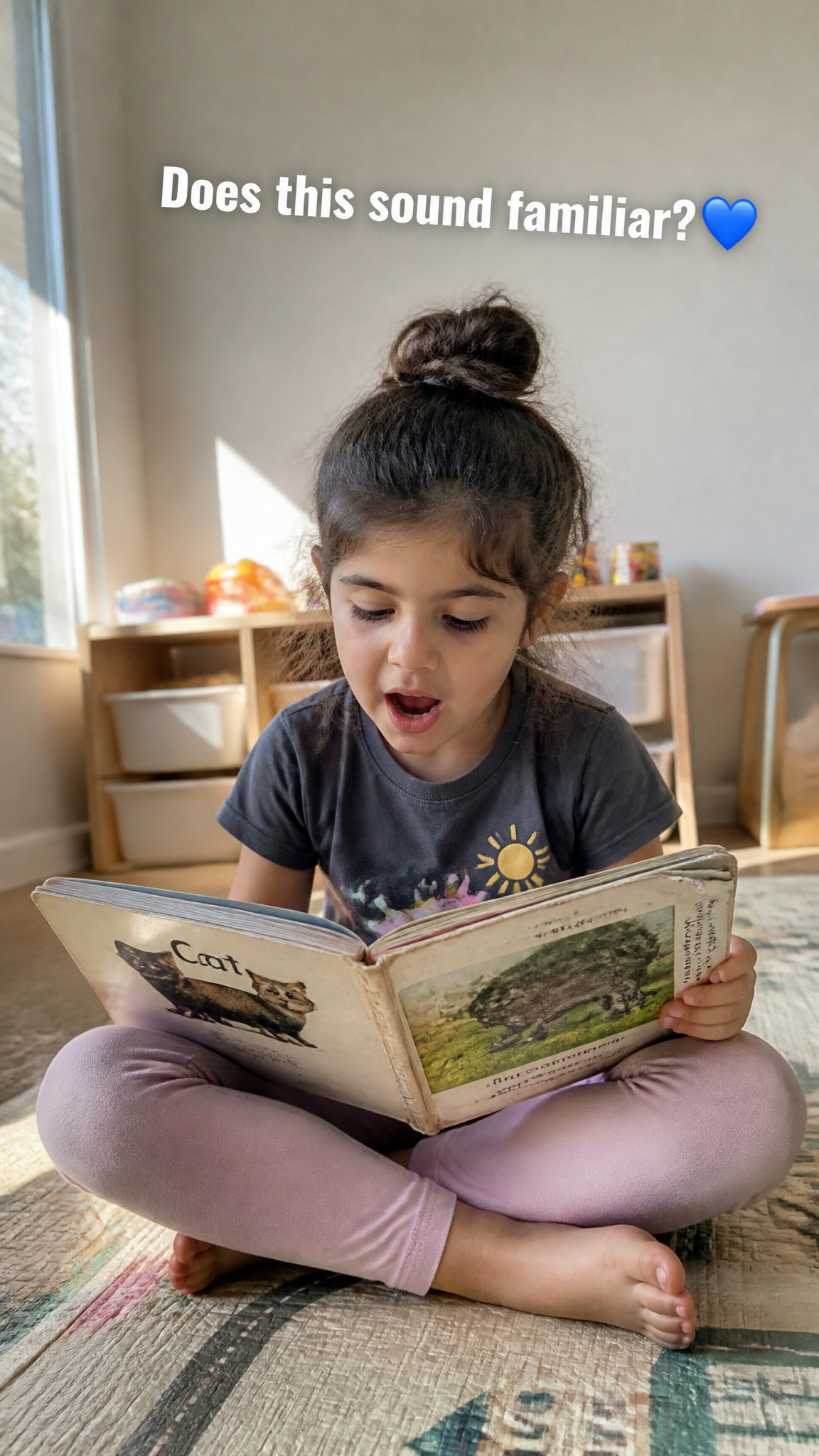
It can be hard to know whether a child’s pronunciation is part of learning to talk or a sign they could use support. A speech-language pathologist (SLP) can help sort through that question. You do not have to wait until a child is impossible to understand before asking.
What is a speech production disorder?
Speech production refers to how a person makes and organizes the sounds of speech. Some children have difficulty producing particular sounds; others use sound patterns that make words harder to understand. An SLP may describe these as articulation and phonological difficulties. Speech sound concerns can also occur alongside language, hearing, or motor speech needs, so an assessment looks at the child’s broader communication profile.
What might families notice?
You might notice that familiar people often interpret your child for others, your child avoids certain words, unfamiliar listeners have trouble understanding them, or frustration rises when a message is missed. A child may also be aware of their speech and feel self-conscious. Those observations are worth sharing, even if you are not sure whether a sound is “on time.”
Speech development varies. The sounds a child uses, the languages or dialects they speak, and how understandable they are in everyday situations all matter. A difference related to a child’s language, dialect, or accent is not automatically a disorder. An SLP should consider the child’s full linguistic and cultural background.
What happens in an evaluation?
An SLP may listen to single sounds and connected speech, look for patterns across words, ask about the child’s history and daily communication, and consider how speech affects participation. The clinician may also ask about hearing or recommend follow-up when appropriate. The purpose is not to label every difference; it is to understand whether support could help and what kind.
When to reach out
Consider asking your pediatrician or an SLP for guidance if people frequently misunderstand your child, your child is distressed about speaking, speech concerns are affecting friendships or classroom participation, or you have a persistent concern. A short conversation can help you decide whether a full evaluation makes sense.
If therapy is recommended, ask what the goals will help your child do in daily life, how progress will be measured, and how practice can fit into ordinary routines. Effective support should be specific to your child—not a generic list of sounds.
Bite-Sized Beginnings provides pediatric speech-language evaluations and therapy in Naperville, Illinois. Visit bitesizedkids.com to learn more or reach out with questions.
Helpful reading
ASHA Practice Portal: Speech Sound Disorders—Articulation and Phonology — https://www.asha.org/practice-portal/clinical-topics/articulation-and-phonology/
A next step, if you need one
Support that makes room for the whole child.
Bite-Sized Beginnings offers neuroaffirming pediatric speech-language services in Naperville, Illinois.